


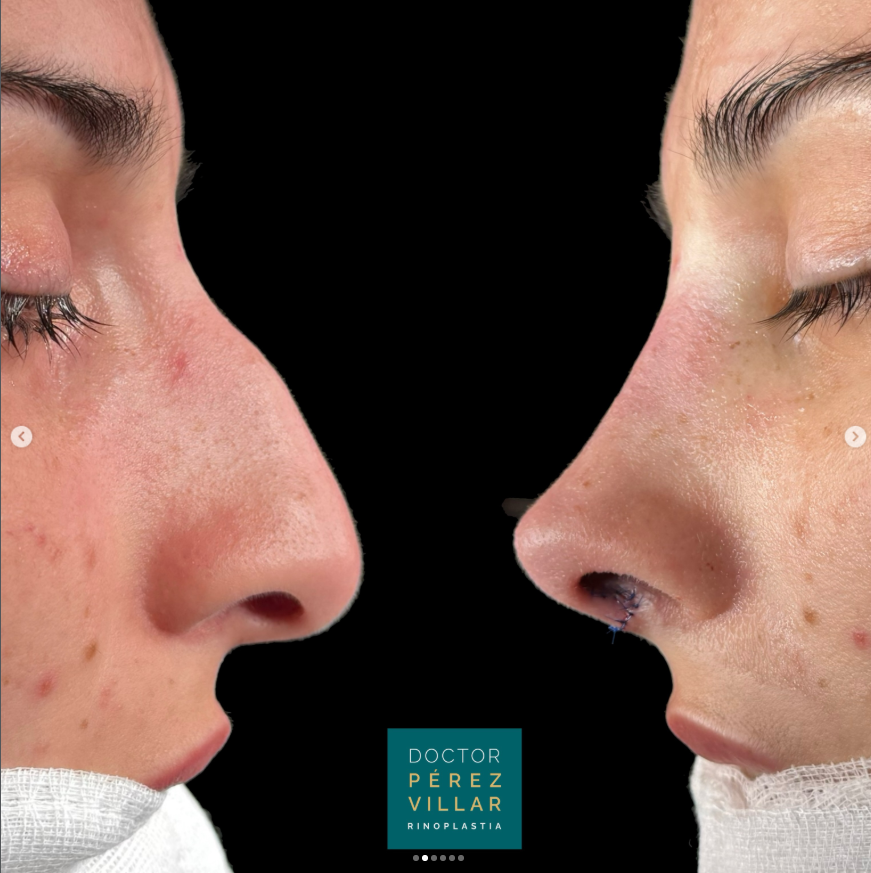
Ultrasonic rhinoplasty is an advanced nasal surgery technique that allows surgeons to reshape nasal structures with greater precision while improving both facial harmony and nasal function. In many patients, the goal is not to completely change the face, but rather to achieve a more balanced and natural-looking nose that fits the rest of the facial features.
In this real patient case treated by Doctor Pérez Villar Valladolid, the patient presented with a normal radix, a prominent dorsal hump, wide nasal bones, a drooping nasal tip with poor support, and a nasal septum deviated to the left side. The surgical planning focused on improving nasal aesthetics and function while maintaining facial harmony and natural proportions.
Facial Evaluation and Personalized Surgical Planning
Before rhinoplasty surgery, it is important to perform an individualized analysis of the nose and overall facial structure.
In this patient, the evaluation identified:
- Prominent dorsal hump
- Wide nasal bones
- Drooping nasal tip with insufficient support
- Left-sided septal deviation
- Visible nasal asymmetries
The consultation allowed a personalized surgical plan aimed at improving both facial harmony and nasal function.
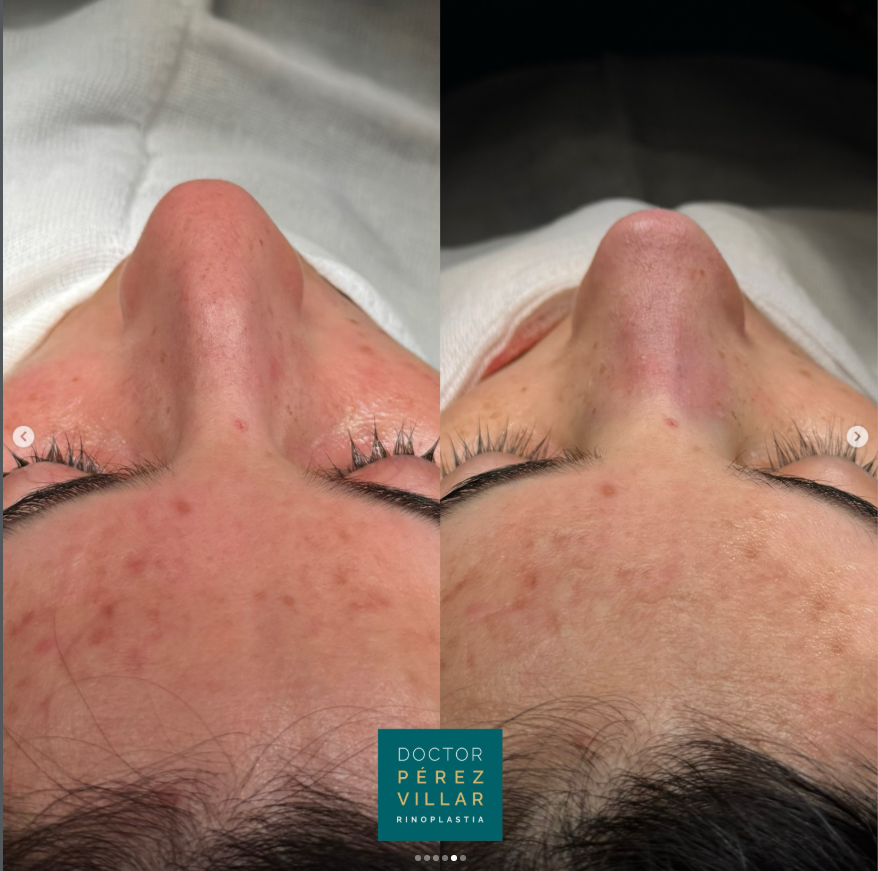
What Was Corrected in This Rhinoplasty Procedure?
The surgery was planned to achieve a natural and balanced result while avoiding exaggerated changes.
The procedure included:
- Reduction of the dorsal hump
- Refinement of the nasal tip
- Structural support placement in the tip
- Improvement of dorsal aesthetic lines
- Septal deviation correction
- Improvement of nasal asymmetries
Careful facial surgical planning is especially important in patients who want to maintain natural facial characteristics.
Ultrasonic Rhinoplasty and Surgical Precision
Ultrasonic rhinoplasty uses piezoelectric instruments to work on nasal bone structures with greater precision.
This technique may be especially useful in patients with:
- Wide nasal bones
- Pronounced dorsal hump
- Bony asymmetries
- Structural deviations
- Need for refined nasal contouring
The indication for this technique always depends on individual anatomical characteristics.
The Importance of Maintaining Facial Naturalness
One of the most important goals in facial surgery is preserving overall facial harmony.
Modern rhinoplasty often aims to improve certain nasal features while maintaining a natural and proportionate appearance.
In this case, nasal projection was preserved while improving:
- Nasal tip definition
- Dorsal contour continuity
- Facial profile balance
- Nasal symmetry
The result was designed to integrate naturally with the patient’s facial features.
Frequently Asked Questions About Ultrasonic Rhinoplasty
Does ultrasonic rhinoplasty completely change the face?
Not necessarily. In many cases, the goal is to improve facial harmony while preserving the patient’s natural appearance and identity.
Can septal deviation and aesthetic concerns be corrected at the same time?
Yes. In certain patients, functional and aesthetic corrections can be combined within the same procedure.
What is a dorsal hump?
A dorsal hump is a prominence on the bridge of the nose that may be formed by bone, cartilage, or both.
Can a drooping nasal tip be corrected with rhinoplasty?
Yes. Depending on the patient’s anatomy, different techniques may be used to improve nasal tip support and definition.
When are the final results visible?
Recovery evolves gradually and depends on each patient. Swelling decreases progressively during healing.
Is ultrasonic rhinoplasty suitable for all noses?
The indication depends on the patient’s anatomy and surgical goals.
Comments are closed.