


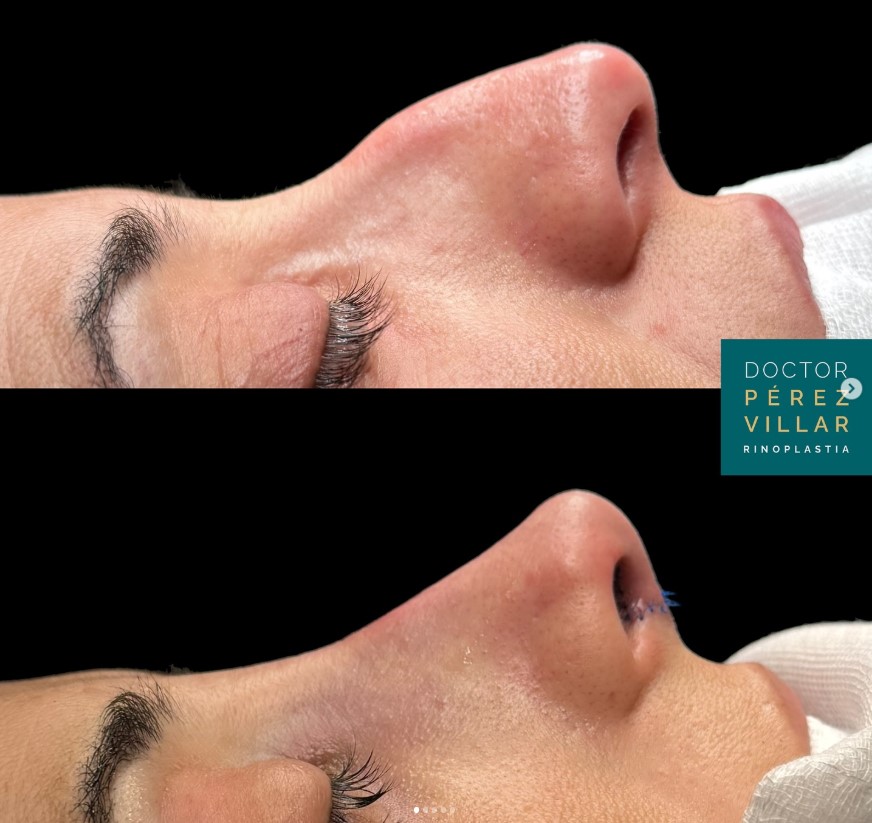
Ultrasonic rhinoplasty has become one of the most innovative and precise techniques in nasal aesthetic surgery. By using ultrasound, the nose can be reshaped in a more controlled manner, minimizing trauma to the tissues and improving postoperative recovery. In this article, we analyze a new case of primary ultrasonic rhinoplasty in a patient with a mixed bump, normal radix, and a drooping tip, features that affected the harmony of her face.
What is a Mixed Bump and How Does It Affect Nasal Aesthetics?
A nasal bump is a protrusion on the bridge of the nose that can consist of different types of tissue. Medically, they are classified as:
- Bony bump: Composed mainly of bone tissue.
- Cartilaginous bump: Made of cartilage.
- Mixed bump: A combination of both bone and cartilage.
In this case, the patient presented a mixed bump, meaning the deformity on the nasal bridge was caused by both an excess of bone and cartilage. This created a prominent nasal appearance, disrupting facial harmony.
The Normal Radix and Its Importance in Nasal Proportion
The radix is the uppermost part of the nasal bridge, located between the eyes, where the nasal structure begins. A normal radix means this area doesn’t have an excessive depression or projection, helping to maintain a balanced proportion with the rest of the nose and forehead.
In many rhinoplasty cases, it is necessary to modify the radix to improve the facial profile. However, in this particular case, the radix had an adequate height, so the intervention focused on correcting the bump and nasal tip.
Drooping Tip: An Aesthetic and Functional Issue
A drooping nasal tip is one of the most common concerns for patients seeking rhinoplasty. This problem is characterized by:
- Lack of definition: The tip of the nose lacks a clear and aesthetic shape.
- Lack of support: The cartilaginous structure is weak and does not maintain an appropriate position.
- Deviation: In some cases, the nasal tip may tilt to one side, creating asymmetry.
In this case, the patient had a drooping, undefined nasal tip, with no support, and deviated to the right, which accentuated the facial disharmony. A drooping tip can make the nose appear longer than it is and negatively affect facial expression.
Correction with Ultrasonic Rhinoplasty
To improve the aesthetic and functional appearance of the patient’s nose, a primary ultrasonic rhinoplasty was performed. This technique uses ultrasound devices to modify the bone with precision, without damaging soft tissues or blood vessels, allowing for faster recovery and reduced swelling.
Procedure Performed
The goal of the surgery was to achieve a more balanced and natural profile by correcting the bump and giving the nasal tip better projection and definition.
Benefits of Ultrasonic Rhinoplasty
Ultrasonic rhinoplasty offers multiple advantages over traditional techniques:
- Greater precision in bone reshaping.
- Less swelling and bruising due to less trauma to soft tissues.
- Faster recovery thanks to a less invasive procedure.
- More natural results, with a better transition between the dorsal and tip areas.
Conclusion
This case of primary ultrasonic rhinoplasty demonstrates how correcting a mixed bump and drooping tip can significantly improve facial harmony. The precision of ultrasound technology allowed for a natural and balanced result, respecting the patient’s facial proportions.
If you are interested in learning more about ultrasonic rhinoplasty and its benefits, we invite you to contact us at Clínica Pérez Villar for a personalized consultation.
Comments are closed.